
Three days is enough to see San Francisco properly if you do not spend them in traffic. This is the plan we give visiting relatives, with the bookings that have to happen before you arrive.
Getting in from the Airport
From SFO, take the free AirTrain to the BART station inside the International Terminal, then BART downtown: about thirty minutes and roughly twelve dollars a person ($11.80 with Clipper). A rideshare is typically thirty-five to sixty-five dollars and slower in traffic. From Oakland, BART connects at the airport station and costs a little more. From San Jose, it is a shuttle plus Caltrain, and it takes real time.
BART runs until around midnight, with reduced service after 9pm. There is no overnight train.
Getting Around, and Whether to Rent a Car
Do not rent a car for a city-only trip. Parking garages downtown and at the Wharf run twenty to sixty dollars a day, the hills and one-way streets are a headache, and the transit here goes where you are going.
A Muni ride is $2.85 with a Clipper card or contactless tap, and a day pass is $5.70, but neither covers cable cars, which are $9 a ride. If you plan to ride cable cars more than once a day, the Visitor Passport, about fifteen dollars for one day, includes them. Kids 18 and under ride Muni free, though cable cars need a separate youth pass.
Day One: The Classic Waterfront
Morning: start at the Ferry Building. The farmers market runs Saturday from 8am and on Tuesday and Thursday mornings, and the hall itself is open daily. Eat breakfast there, then take the F-line historic streetcar up the Embarcadero.
Midday: Pier 39 for the sea lions, which are free and the best thing at the Wharf, then Musée Mécanique at Pier 45, also free to enter, with a pocketful of quarters. Lunch at a walk-up seafood window rather than a Jefferson Street dining room.
Afternoon: walk west to Aquatic Park and Ghirardelli Square, then ride the Powell-Hyde cable car up over Russian Hill. Board at the Hyde and Beach end, where the line is shorter than at the Powell Street turntable.
If you have Alcatraz tickets, this is the day: ferries leave from Pier 33 and the visit runs about two and a half to three hours on the island, plus the crossing. The audio tour is excellent and works well for roughly ages eight and up.
Day Two: The Park and the Bridge
Morning: Golden Gate Park. The Japanese Tea Garden is free from 9 to 10am on Mondays, Wednesdays and Fridays. The Conservatory of Flowers opens at 10. With kids, the Koret playground and the 1914 carousel are worth an hour on their own.
Midday: pick one big museum. The California Academy of Sciences has the aquarium, the rainforest and the penguins and runs about forty-nine dollars for adults and thirty-nine for children, more at peak times. The de Young is twenty-five dollars, free for anyone under eighteen, and its observation tower is free to everyone.
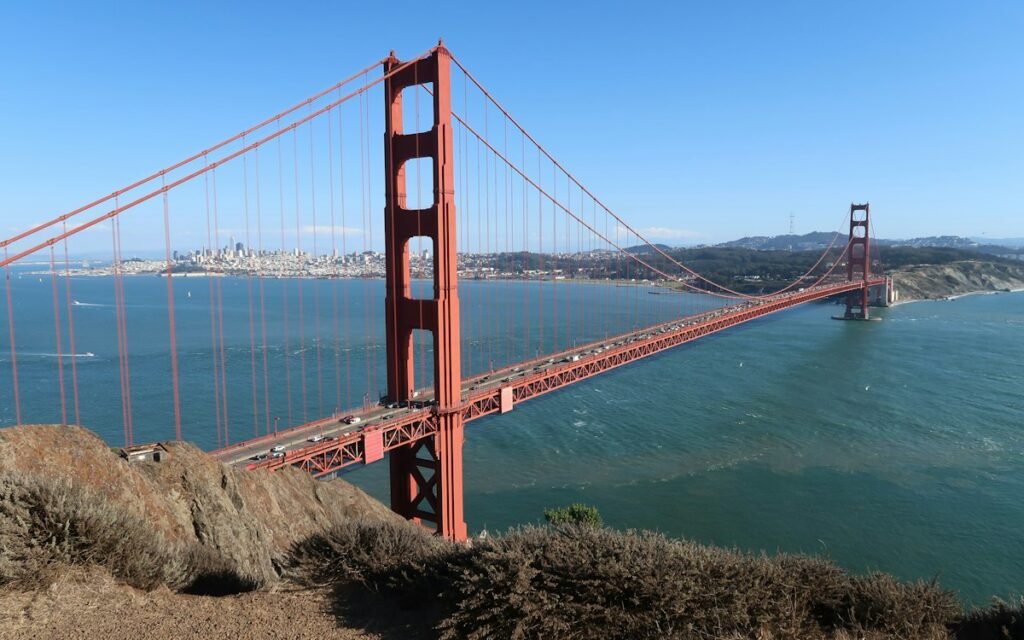
Afternoon: head north to the Presidio. Walk the Golden Gate Bridge from the Welcome Center, which is free; the east sidewalk is open to pedestrians from 5am to about 9pm in summer and 6:30pm in winter. Then drop down to Crissy Field or the Tunnel Tops for the view back at the city, and food trucks if you need them.
Day Three: Neighborhoods
Morning: Chinatown, starting at the Dragon Gate at Grant and Bush. Walk the alleys, watch fortune cookies being folded by hand in Ross Alley, and eat dim sum from a takeout counter.
Midday: continue into North Beach for pizza by the slice, City Lights bookstore and Washington Square, then climb Telegraph Hill to Coit Tower for the murals and the view. The elevator to the observation deck is around ten dollars.
Afternoon: the Mission for the murals on Balmy and Clarion Alleys, a burrito that will ruin burritos elsewhere for you, and an hour lying on the grass at Dolores Park, which is where San Francisco actually hangs out. Finish at Alamo Square for the Painted Ladies in the late light.
If You Have a Fourth Day
Take the ferry to Sausalito, about half an hour across the bay, and ride or walk back over the bridge. Muir Woods is beautiful and requires a parking or shuttle reservation booked in advance; you cannot just drive up. Fares, fees and booking rules for each are in Day Trips from San Francisco Without a Car.
Practical Things Nobody Tells You
Come in September or October. Summer here is the cold, foggy season. The clear warm weather arrives in the fall, and September is the warmest month of the year.
Pack layers, always. A sunny seventy-degree afternoon downtown becomes a fifty-five-degree wind tunnel at the bridge. Bring a jacket every single day.
Leave nothing in your car. Not a bag, not a charger, not a jacket. Break-ins at scenic viewpoints and tourist garages are the city’s most common crime against visitors, and an empty-looking car is the best defense.
Passes are worth it only if you use them. CityPASS runs about ninety dollars for adults and seventy for children and covers four attractions of eight, which pays off if you are doing several paid museums. Go City is similar in structure. Neither includes Alcatraz. If your trip is mostly the bridge, Chinatown, the Wharf and the parks, you will not break even on either.
Where to stay with a family: Fisherman’s Wharf is closest to the kid-friendly sights, the Marina is quieter and near the bridge, and Union Square is the most central for transit, though it borders the Tenderloin, which is worth avoiding on foot at night.
Money: sales tax is 8.625 percent, tipping at sit-down restaurants is 18 to 20 percent, and many San Francisco restaurants add a service or health-care surcharge to the bill. Check the receipt before you tip on top of it.
Is a San Francisco Sightseeing Pass Worth It?
A family of four should do this maths before buying anything. Passes only win on museum-heavy trips.
| Option | Price guide | Includes Alcatraz? | Worth it when |
|---|---|---|---|
| Pay as you go | Only what you use | You book it separately | Your list is mostly free sights |
| CityPASS | About $90 adult, $70 child | No | You will do four of its eight attractions |
| Go City | From about $74 to $109 a person | No | You are doing several paid museums a day |
| Muni Visitor Passport | About $15 a day | — | You want unlimited cable cars and Muni |
| Alcatraz day tour | About $48 adult, $29 child 5–11 | It is the ticket | Always book about 90 days ahead |
Correction, 1 October 2026: BART from SFO to downtown was given as about $11; BART’s fare for that trip with Clipper is $11.80.
Local Legend: Did the 1962 Alcatraz Escapees Make It?
What is actually true: The escape is real; the ending is not known. The FBI says Frank Morris and brothers John and Clarence Anglin left dummy heads made of plaster, flesh-tone paint and real hair in their beds, climbed out through a ventilator onto the roof, and set off on a raft stitched together from more than 50 raincoats. The FBI calls their fate a mystery to this day.
Prices and hours were checked in September 2026 and can change, so confirm before you go.
More Guides
Day Trips from San Francisco Without a Car: Sausalito, Muir Woods, Napa
Car-free day trips from San Francisco: the ferry to Sausalito, Muir Woods reservations and fees, Angel Island, Alcatraz booking and getting to…
Read the guide →Outside Lands 2027: Dates, Tickets and Getting There
Outside Lands 2027 is August 6-8 in Golden Gate Park. What the festival has announced so far: dates, ticket types, the shuttle…
Read the guide →Lunar New Year Flower Fair in San Francisco Chinatown
San Francisco's Chinatown Lunar New Year Flower Fair: where it is, the 2026 dates and hours, what is for sale, and when…
Read the guide →Questions People Ask About Three Days in San Francisco: A First-Timer’s Guide
Is CityPASS or Go City worth it in San Francisco?
Only for a museum-heavy trip. CityPASS is about $90 adult and $70 child and covers four attractions of eight, so it pays off if you are doing the Academy of Sciences, the Exploratorium, a bay cruise and the aquarium. Go City works the same way. Neither includes Alcatraz, and if your plan is the bridge, Chinatown, the Wharf and the parks, you will not break even.
Do you need a car in San Francisco?
No, and it is usually a liability. Garages run twenty to sixty dollars a day, the hills and one-way streets are a headache, and break-ins at scenic car parks are common. BART from SFO is about twelve dollars ($11.80 with Clipper), Muni is $2.85 a ride, and everything in this itinerary is reachable without a car.
How far in advance should you book Alcatraz?
As soon as your dates are fixed. Tickets are released about ninety days out through the official operator and routinely sell out weeks ahead, especially morning departures in summer. Anything sold elsewhere is a reseller.
What is the one thing to skip in San Francisco?
Driving to Lombard Street to wait in line for the crooked block. Walk up from the Hyde Street cable car stop instead, look for five minutes, and spend the saved hour somewhere better. Locals would also steer you away from the sit-down seafood restaurants on Jefferson Street.
What should you know about safety as a visitor?
The main sightseeing areas are fine in daylight. The Tenderloin, roughly between Market, Van Ness, Geary and Powell, is the area most locals avoid on foot at night. The genuinely common crime against visitors is car break-ins, so leave absolutely nothing visible in a parked car.
More to Explore
Happening Soon
- Treasures of the Pharaohs Sat, Aug 1, 2026 – Jan 31, 2027 · de Young Museum
- Ferry Plaza Farmers Market Sat, Sep 12 – Dec 31 · Ferry Building Plaza
- Heart of the City Farmers Market Sun, Sep 13 – Dec 31 · Fulton Plaza, Civic Center
- SF State Observatory Public Nights (Wed–Fri, through Dec 4) Thu, Oct 1 – Dec 4 · SF State Observatory, Thornton Hall
Places to Check Out
- Alta Plaza Park Parks & Playgrounds
- Angelo J. Rossi Playground Parks & Playgrounds
- Aquarium of the Bay Attractions
- Asian Art Museum Museums
Cite this page: Project SF, “Three Days in San Francisco: A First-Timer’s Guide”, projectsf.com/guides/three-days-in-san-francisco-first-time/ (updated ).