
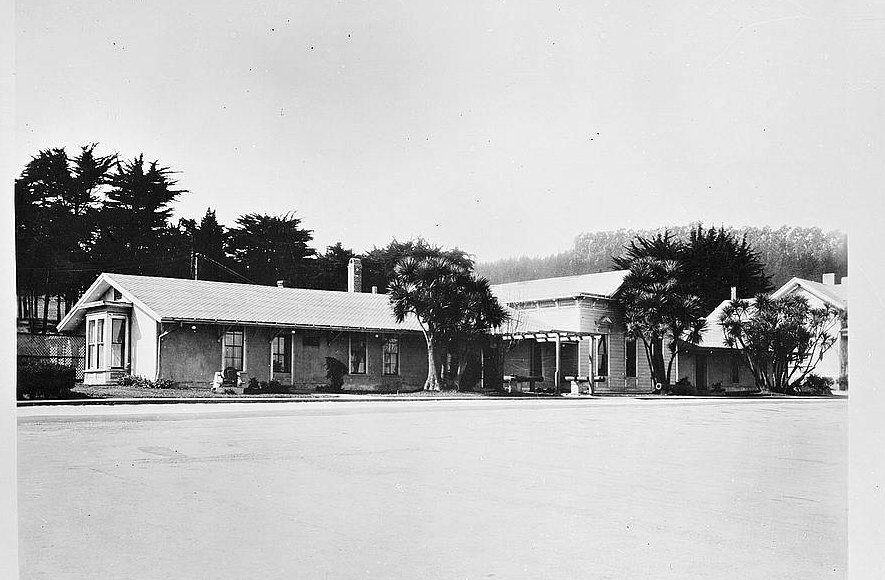
The Presidio was a Spanish fort from 1776, a Mexican post until 1846, a US Army base for nearly 150 years and, since 1994, part of a national park. Today it covers 1,500 acres.
| When | What happened | Source |
|---|---|---|
| Thousands of years | The Yelamu, a tribe of the Ramaytush Ohlone, live on the land at the Golden Gate (no date given) | Presidio Trust |
| 27 Jun 1776 | Anza Expedition families reach the area of present-day San Francisco | NPS Anza Trail |
| 1776 | Spain builds a military fort, a presidio, overlooking San Francisco Bay | Presidio Trust |
| 1822–1846 | Mexico operates the post | Presidio Trust |
| 1846 | The US Army takes over after the Mexican-American War | Presidio Trust |
| 1942 | At the Presidio, Lt. Gen. John L. DeWitt signs 108 Civilian Exclusion Orders that remove Japanese Americans from the West Coast | NPS |
| 1962 | Declared a National Historic Landmark District | Presidio Trust |
| 1972 | Congress creates Golden Gate National Recreation Area; the law says the Presidio would join it if the Army ever left | Presidio Trust |
| 1989 | The Department of Defense announces the Presidio will close | Presidio Trust |
| 1994 | The Presidio joins the national park system | Presidio Trust |
| 1996 / 1998 | Congress passes the Presidio Trust Act (1996); the Trust begins operating (1998) | Presidio Trust |
| 27 Jun 2026 | Los Californianos hold a public celebration at Pershing Square for the 250th anniversary of the Anza Expedition’s arrival | Los Californianos |
Before the Fort
The Presidio Trust says the Yelamu, a local tribe of the Ramaytush Ohlone, lived on the land at the Golden Gate for thousands of years. The Trust gives no date for the start of that, so neither do we.
1776 to 1846: Spain and Mexico
In 1775–76 Captain Juan Bautista de Anza led more than 240 colonists from present-day Mexico, and families reached the area on 27 June 1776, says the National Park Service. Spain built the presidio the same year. Mexico operated the post from 1822 to 1846. The US Army took it over after the Mexican-American War.
1846 to 1989: The Army Post
The Presidio stayed a US Army post until the late twentieth century. One episode belongs here: the National Park Service says Lt. Gen. John L. DeWitt signed 108 Civilian Exclusion Orders at the Presidio that removed Japanese Americans from the West Coast, following Executive Order 9066 of 19 February 1942. The site was declared a National Historic Landmark District in 1962.
1972 to Today: A Park
Congress created Golden Gate National Recreation Area in 1972, and the law said the Presidio would join it if the Army ever left. The Department of Defense announced its closure in 1989, and the Presidio joined the national park system in 1994. The Presidio Trust Act passed in 1996 and the Trust began operating in 1998. The Trust says the site now has 1,500 acres, nearly 10 million visits a year, 3,000 residents and 200 organizations.
Visiting
The National Park Service lists the Presidio as free and open 24 hours a day, with visitor facilities on their own hours and parking charged at most places. The Presidio Trust runs a free history exhibition in the Officers’ Club (hours: Friday to Sunday, 11am to 4pm as last read), with 1810s adobe walls in its Mesa Room. The Trust also warns of Main Post construction through winter 2027, so expect detours. See the Presidio with kids and, for the stories people tell about it, the local legends.
Still Unconfirmed
- When the Yelamu first lived here. The Trust gives only “thousands of years”.
- Whether the Officers’ Club is the oldest building in the city. The Trust says so; Mission Dolores makes the same claim for itself.
- Current hours. Taken from the sources on the date read; the Trust changes them, so check before a visit.
More San Francisco History
Keep going with the San Francisco history hub: a 58-event timeline, historic sites to visit, history tours (many free) and the National Historic Landmarks. Prefer stories people tell? Try the local legends, fact-checked.
Sources
- Presidio Trust, A Brief History of the Presidio, read 27 October 2026.
- National Park Service, Juan Bautista de Anza National Historic Trail: History & Culture, read 27 October 2026.
- National Park Service, Golden Gate NRA, Remembering Executive Order 9066, read 27 October 2026.
- National Park Service, Presidio of San Francisco: Plan Your Visit, read 27 October 2026.
- Presidio Trust, Presidio History Exhibition, read 27 October 2026.
- Los Californianos, Anza 250 event page, read 27 October 2026.
Dates and figures are as the sources state them, read on 27 October 2026.
More Guides
Presidio Ghosts and the Pet Cemetery: Legends and Facts
The Presidio’s ghost stories and the Pet Cemetery legends, told as stories and then checked against the Presidio Trust and National Park…
Read the guide →Chinatown Tunnels Myth: What Is Under Grant Avenue
The claim that a maze of tunnels runs under San Francisco Chinatown, traced to 1800s tour guides, and what SFGATE and KALW…
Read the guide →Is Coit Tower a Fire Hose Nozzle? The Legend and the Facts
The story that Coit Tower was shaped like a fire hose nozzle to honour firefighters, and what San Francisco Recreation and Parks…
Read the guide →Questions People Ask About Presidio History: 1776 Fort to National Park
When was the Presidio founded?
Spain built the military fort in 1776, according to the Presidio Trust.
Who ran the Presidio before the US Army?
Spain from 1776, then Mexico from 1822 to 1846. The US Army took over in 1846.
When did the Presidio become a national park?
It joined the national park system as part of Golden Gate National Recreation Area in 1994, after the Defense Department announced its closure in 1989.
What is the Presidio Trust?
A federal agency created by the Presidio Trust Act of 1996 that began operating in 1998 and now manages most of the Presidio.
Is the Presidio free to visit?
The National Park Service lists it as free and open 24 hours a day; parking is charged at most places and visitor facilities have their own hours.
More to Explore
Happening Soon
- Treasures of the Pharaohs Sat, Aug 1, 2026 – Jan 31, 2027 · de Young Museum
- Ferry Plaza Farmers Market Sat, Sep 12 – Dec 31 · Ferry Building Plaza
- Heart of the City Farmers Market Sun, Sep 13 – Dec 31 · Fulton Plaza, Civic Center
- SF State Observatory Public Nights (Wed–Fri, through Dec 4) Thu, Oct 1 – Dec 4 · SF State Observatory, Thornton Hall
Places to Check Out
- Aquarium of the Bay Attractions
- Asian Art Museum Museums
- Balmy Alley Murals Attractions
- Berggruen Gallery Art Galleries
Cite this page: Project SF, “Presidio History: 1776 Fort to National Park”, projectsf.com/guides/san-francisco-presidio-history/ (updated ).