
- 1776year Spain founded the Presidio and Mission Dolores
- 39historic sites to visit
- 15National Historic Landmarks
- 46tours and trails
- San Francisco history by era
- Historic sites by neighborhood
- Tours and trails
- History events
- Markers, archives, America 250
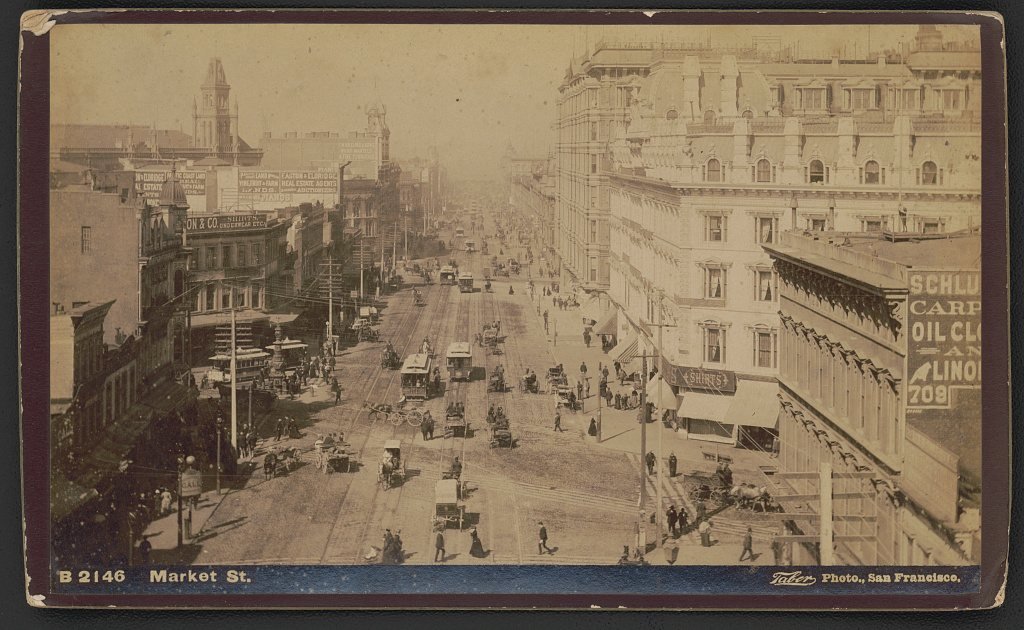
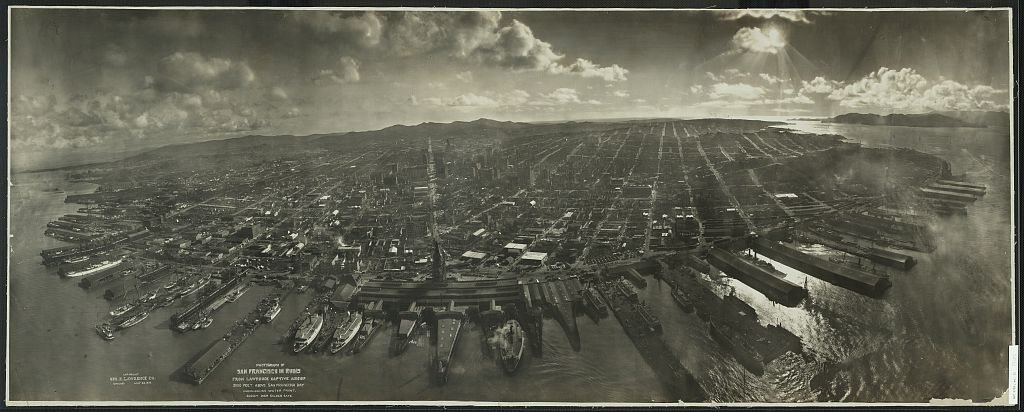
San Francisco’s history runs from the Yelamu Ohlone, who lived on this peninsula for thousands of years, through a Spanish presidio and mission in 1776, the Gold Rush, the 1906 earthquake and fire, the bridges, the 1945 conference that created the United Nations, and the protest and civil-rights movements of the 1960s and 1970s. Start with the timeline, pick a neighborhood, or go straight to the free walking tours.
San Francisco History by Era
The short version, era by era. Every date is on the full 58-event timeline with its source.
- For thousands of years (no date given): The Yelamu, a local tribe of the Ramaytush Ohlone peoples, lived on the lands at the Golden Gate.
- 1775-1776: Captain Juan Bautista de Anza leads more than 240 colonists from present-day Mexico to establish a mission and presidio in the San Francisco area.
- 1776: Misión San Francisco de Asís (Mission Dolores) is founded under Father Junípero Serra; the Mission’s own pages give two dates, June 29 and October 9, 1776.
- 1846: The United States Army takes over the Presidio after winning the Mexican-American War.
- 1849: San Francisco’s population reaches a staggering 25,000 as gold fever spreads; the city grows as tent-houses, hotels, saloons and shanties.
- September 9, 1850: California is admitted to the Union as the 31st state.
- April 18, 1906 (about 5:12 a.m.): The foreshock strikes at about 5:12 a.m. local time; the main earthquake follows roughly 20 to 25 seconds later. The rupture covered the northernmost 296 miles (477 km) of the San Andreas fault.
- December 28, 1912: Muni opens with streetcar service on the A and B lines along Geary Street; first major US city to create a city-owned and operated transit system.
- February-December 1915: The Panama-Pacific International Exposition celebrates completion of the Panama Canal and the city’s recovery from 1906 (source gives ‘between February and December 1915’).
- November 12, 1936: San Francisco-Oakland Bay Bridge opens to traffic.
- May 27, 1937: Golden Gate Bridge opens to pedestrians.
- February 19, 1942: President Franklin D. Roosevelt signs Executive Order 9066; at the Presidio, Lt. Gen. John L. DeWitt later signs 108 Civilian Exclusion Orders that remove Japanese Americans from the West Coast.
- March 21, 1963: The last 27 inmates leave Alcatraz; the penitentiary closes (March 1963).
- November 1969 – June 1971: Indians of All Tribes, Inc. occupy Alcatraz Island, calling it the first intertribal protest action to focus the nation’s attention on Native peoples.
- November 7, 1978: Proposition 6 (the Briggs Initiative) is defeated by more than 1 million votes.
- February 12, 2004: Mayor Gavin Newsom begins issuing marriage licenses to same-sex couples.
- June 27, 2026: Los Californianos hold a public celebration at Pershing Square in the Presidio of the 250th anniversary of the 1775-76 Anza Expedition’s arrival in San Francisco.
Historic Sites to Visit, by Neighborhood
The highlights in each region. Hours, admission and every site are on historic sites in San Francisco.
Historic Tours and Trails
46 ways to see San Francisco history on foot, by cable car or with a ranger, from free SF City Guides walks to the Alcatraz night tour. All of them: historic tours in San Francisco.
| Tour or trail | Where | Price | When |
|---|---|---|---|
| Alcatraz Day Tour (ferry plus cellhouse audio tour) | Alcatraz Island, Pier 33 | Adults 18+ $47.95; seniors 62+ $45.15; youth 12-17 $47.95; children 5-11 $29.15; under 5 $0 | Departures about every half hour from 8:45am; closed Thanksgiving, Christmas, New Year’s Day; closed Oct 26-Nov 18 2026 for dock repairs (NPS) |
| 1906: Earthquake and Fire (SF City Guides) | SOMA to Union Square | Free (donations welcome) | Next dates on the tour page calendar; City Guides runs about 70 tours |
| Chinatown (SF City Guides) | Chinatown | Free (donations welcome) | Next dates on the tour page calendar; City Guides runs about 70 tours |
| Cable Cars: Halfway to the Stars (SF City Guides) | Nob Hill | Free (donations welcome) | Next dates on the tour page calendar; City Guides runs about 70 tours |
| Gold Rush City (SF City Guides) | Downtown | Free (donations welcome) | Next dates on the tour page calendar; City Guides runs about 70 tours |
| Haas-Lilienthal House guided tour | Pacific Heights | General $10; children 12 and under free | 2026 select Wednesdays (12:30pm, 2pm) and Saturdays (noon, 1pm, 2pm) |
| Barbary Coast Trail | Old Mint to Fisherman’s Wharf | Free to walk; printed guide and audio tour sold separately (See official site) | Anytime |
| Barbary Coast Trail guided tour with creator Daniel Bacon | Downtown | See official site | See official site |
History Events Coming Up
Parades, commemorations, tours and talks with dates the organizers have posted. All 21: history events in San Francisco.
| Event | Where | When |
|---|---|---|
| Performance & Talkback: How to Live in a House on Fire (Staged Reading Series) | San Francisco | Nov 5, 2026 to Nov 7, 2026 |
| Dia de los Muertos and Diwali Festival | San Francisco | Nov 7, 2026 |
| Gold Rush and Sunken Ships | San Francisco | Nov 7, 2026 |
| Book Talk with Lily Qi: Elected American | San Francisco | Nov 8, 2026 |
| Heritage Happy Hour: 111 Minna Gallery | San Francisco | Nov 12, 2026 |
| Happy Hour Tours of Historic Building One | San Francisco | Nov 13, 2026 |
| 8th Annual Kevin Starr Lecture: Interpreting 250 Years Since the Anza Expedition | San Francisco | Nov 13, 2026 |
| Finding Your Taiwanese and Chinese Roots Seminar | San Francisco | Nov 15, 2026 |
Historical Markers, Archives and America 250
| Program | Run by | What it is | Link |
|---|---|---|---|
| SF Planning: Landmark Designation (Article 10 landmarks) | San Francisco Planning Department | City Landmarks designated under Article 10 of the Planning Code; the Board of Supervisors designates on Historic Preservation Commission recommendation. The Landmark Designation page’s newest entry is ‘San Francisco’s 336th Landmark’ (House of Latin Rock). (at least 336 landmark numbers (336th shown); FAQ says ‘over 300’; 14 Article 10 districts) | Official page |
| Article 10 and Article 11 Districts | San Francisco Planning Department | Lists the Article 10 landmark districts: Alamo Square, Blackstone Court, Bush Street-Cottage Row, Civic Center, Dogpatch, Jackson Square, Liberty Hill, Northeast Waterfront, South End, Telegraph Hill, Webster Street, Duboce Park, Market Street Masonry, Clyde and Crooks Warehouse District. (14 Article 10 districts) | Official page |
| Historic Preservation Commission | City and County of San Francisco | Seven-member commission established in 2008 (Charter Section 4.135); advises the Mayor, Board and departments and recommends designations. Meets first and third Wednesday at 12:30pm, Room 400, City Hall. (7 members) | Official page |
| Historic Preservation FAQs (SF Planning) | San Francisco Planning Department | States citywide counts of designated and listed resources. (over 300 Article 10 Landmarks; over 1,110 lots in Article 10 Historic Districts; over 120 buildings individually listed in the National Register plus 24 National Register Historic Districts; over 3,300 parcels listed in or eligible for the California Register) | Official page |
| California Historical Landmarks (San Francisco County) | California Office of Historic Preservation | State landmark program; the OHP San Francisco County page lists numbered landmarks from No. 79 (Presidio of San Francisco) to No. 1024 (Juana Briones). (48 entries on the OHP San Francisco County page) | Official page |
| National Historic Landmarks Program | National Park Service | Federal designation of nationally significant places. NPS lists California at 151 NHLs statewide; the NHL database is being rebuilt and the page does not break the list out by city. (California (151) statewide) | Official page |
| San Francisco History Center (Daniel E. Koshland SF History Center) | San Francisco Public Library | Research collection on the 6th floor of the Main Library, 100 Larkin Street: books, newspapers, photographs, maps, posters, manuscripts and ephemera; also the City and County of San Francisco’s archives. Main Library hours: Mon 9-6, Tue-Thu 9-8, Fri 12-6, Sat 10-6, Sun 12-6. (none stated) | Official page |
| Online Archive of California (OAC) | UC Libraries / California Digital Library | Gateway to finding aids for archival holdings across the state. (60,000+ collection guides; 350+ institutions) | Official page |
| Calisphere | UC Libraries / California Digital Library | Free gateway to California digital collections: photographs, documents, art, film, oral histories. (over 2 million items; more than 2,000 collections; 300+ contributing organizations) | Official page |
| San Francisco Heritage | San Francisco Heritage | Membership nonprofit whose stated mission is to preserve and enhance San Francisco’s architectural and cultural identity; runs the 1886 Haas-Lilienthal House (tours Wednesday and Saturday afternoons per its home page). (none stated) | Official page |
| The Presidio Trust | Presidio Trust | Oversees the Presidio (a National Historic Landmark within Golden Gate NRA) in partnership with NPS and the Golden Gate National Parks Conservancy; Trust began operations in 1998. (none stated) | Official page |
| Port of San Francisco | Port of San Francisco | Owns the waterfront from Pier 1 (The Embarcadero); the homepage lists maritime services and Hyde Street Harbor but no dedicated history section was found on the page fetched. (none stated) | Official page |
| GLBT Historical Society | GLBT Historical Society (nonprofit, founded 1985) | Collects, preserves and exhibits LGBTQ history; museum at 4127 18th Street, archives at 989 Market Street (by appointment). Its home page lists two conflicting museum-hour schedules; admission not listed. (none stated) | Official page |
| OpenSFHistory (Western Neighborhoods Project) | Western Neighborhoods Project (nonprofit) | Community photo archive of San Francisco history drawn largely from private collections; a community archive, not a government source. Licensing terms not stated on the home page. (54,725 historical images online (as shown 2026-10-23)) | Official page |
National Historic Landmarks
San Francisco has 15 National Historic Landmarks on the National Park Service list. See every San Francisco National Historic Landmark by region, with which ones you can visit.
What We Could Not Verify
- Hyde Street Pier and the park’s historic ships: the National Park Service’s own FAQ page asks why the ships are being moved to Mare Island (Vallejo) and its basic-information page says the pier is closed, so we list the pier as closed. The ships will return to San Francisco when the pier rebuild is done; no date is published.
We re-check these when the source pages change. Spot something we missed? Use the corrections page.
Last checked October 23, 2026 by the Project SF editors against each operator’s, agency’s or organizer’s own page.
Sources
- National Park Service: Presidio of San Francisco history
- National Park Service: National Historic Landmarks program
- San Francisco Planning: Landmark designation
- Mission Dolores (official site)
- Presidio Trust: A Brief History of the Presidio
- NPS Juan Bautista de Anza National Historic Trail: History & Culture
- SF Planning: Landmark Designation (Article 10 landmarks)
- Article 10 and Article 11 Districts
- Historic Preservation Commission
- Historic Preservation FAQs (SF Planning)
- California Historical Landmarks (San Francisco County)
- National Historic Landmarks Program
- San Francisco History Center (Daniel E. Koshland SF History Center)
- Online Archive of California (OAC)
- Calisphere
- San Francisco Heritage
- The Presidio Trust
- Port of San Francisco
- GLBT Historical Society
- OpenSFHistory (Western Neighborhoods Project)
More Guides
History Events in San Francisco: Parades, Commemorations and Tours
History events in San Francisco from November 2026 to mid-2027: parades, commemorations, tours and talks, with the organizers' own dates.
Read the guide →Historic Tours in San Francisco: Walking Tours, Trails and Ranger Programs
46 historic tours in San Francisco: free SF City Guides walks, Alcatraz and Fort Point, cable cars and trails, with prices and…
Read the guide →San Francisco National Historic Landmarks: 15 Confirmed, by Neighborhood
15 National Historic Landmarks in San Francisco confirmed on National Park Service pages, by neighborhood, with dates and visiting status.
Read the guide →Questions People Ask About San Francisco History: Historic Sites, Landmarks, Tours and Timeline
When was the Golden Gate Bridge built?
Construction officially started on January 5, 1933. The bridge opened to pedestrians on May 27, 1937 and to vehicles at noon on May 28, 1937, according to the Golden Gate Bridge, Highway and Transportation District's key-dates page.
How old is Mission Dolores?
Mission Dolores says its chapel is the oldest intact building in the City of San Francisco. The Mission's own pages give two founding dates for the mission, June 29 and October 9, 1776, so we show both.
What happened in San Francisco in 1906?
A foreshock hit at about 5:12 a.m. on April 18, 1906. The US Geological Survey says more than 3,000 people died and about 225,000 of roughly 400,000 residents were left homeless; the Army's relief report counted fewer deaths.
Where was the United Nations Charter signed?
In San Francisco. The National Archives says the United Nations was formally established when the Charter was signed on June 26, 1945, after delegates of fifty nations had met in the city from April 25.
How did the Gold Rush change San Francisco?
The National Park Service says gold was discovered in January 1848 and that by 1849 the city's population had grown to about 25,000, with few permanent buildings except the Presidio and Mission Dolores.
When did the Spanish found the Presidio of San Francisco?
The National Park Service says the Spanish arrived in 1776 to set up the northernmost outpost of their empire in western North America. Mexico ruled it for 24 years and the US Army took control in 1846.
Are there free historic things to do in San Francisco?
Yes. 24 of the walking tours we list are SF City Guides tours, which are free (donations welcome), and 16 of the 39 sites we list charge no admission. Hours and fees are read from each operator's page and change, so check before you go.
More to Explore
Happening Soon
- Treasures of the Pharaohs Sat, Aug 1, 2026 – Jan 31, 2027 · de Young Museum
- Ferry Plaza Farmers Market Sat, Sep 12 – Dec 31 · Ferry Building Plaza
- Heart of the City Farmers Market Sun, Sep 13 – Dec 31 · Fulton Plaza, Civic Center
- SF State Observatory Public Nights (Wed–Fri, through Dec 4) Thu, Oct 1 – Dec 4 · SF State Observatory, Thornton Hall
Places to Check Out
- Aquarium of the Bay Attractions
- Asian Art Museum Museums
- Balmy Alley Murals Attractions
- Berggruen Gallery Art Galleries
Cite this page: Project SF, “San Francisco History: Historic Sites, Landmarks, Tours and Timeline”, projectsf.com/guides/san-francisco-history/ (updated ).