
UCSF's Mission Bay campus is hard to park near, and 4th Street is closed on festival day, so take Muni's T Third line; the stop is about 230 meters from Koret Quad. The exhibits are meant to be touched, so bring kids who will.
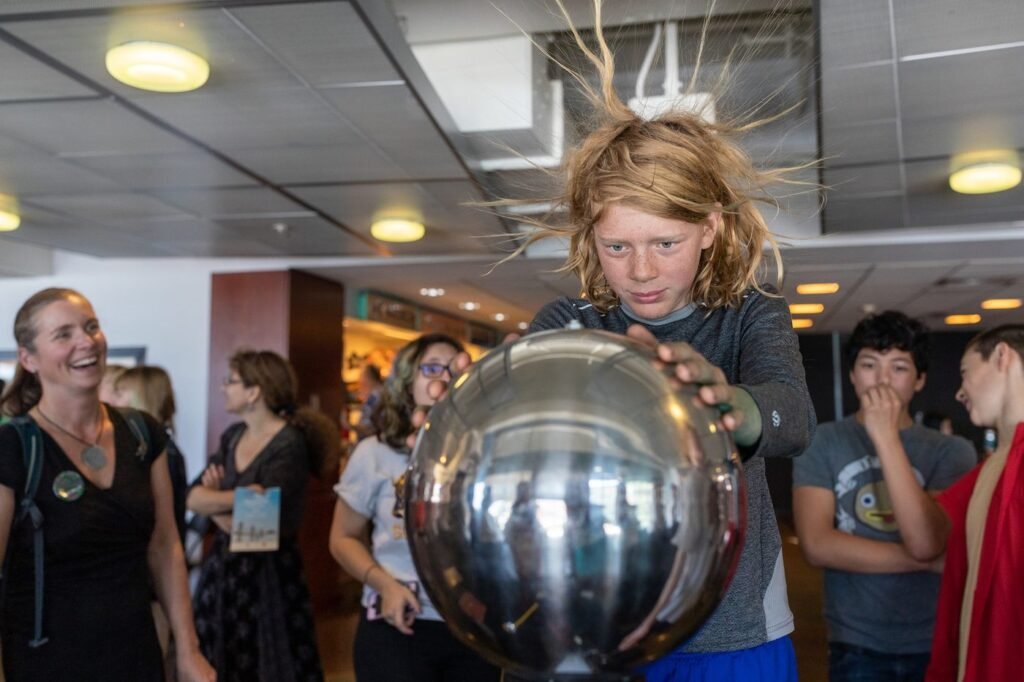
Once a year, UCSF opens its Mission Bay campus to anyone who wants to touch, build, launch or look through a microscope at something. The Bay Area Science Festival, in its 13th year, took place on Saturday, October 17, 2026, from 11am to 4pm on and around Koret Quad. It was free, with no tickets, and ran rain or shine. The organizers say about 15,000 people came for more than 125 hands-on experiences. The 2027 festival date has not been announced (not confirmed: we read bayareasciencefestival.org on November 8, 2026 and it lists no 2027 date; the organizers can confirm), so use this page as a planning guide for the next one.
Koret Quad, UCSF Mission Bay · Held Sat Oct 17, 2026, 11am–4pm · Free, no registration · bayareasciencefestival.org · Our event listing
How the 2026 Festival Went
The 13th Bay Area Science Festival happened on Saturday, October 17, 2026, and the organizers say about 15,000 people came to UCSF Mission Bay for more than 125 experiences: hands-on experiments, games, demonstrations, behind-the-scenes lab tours, stage shows, live podcasts and science talks.
“Part of what’s magic about the festival is that the scientists are here sharing their passion with everyone,” said UCSF Science & Health Education Partnership Director Katherine Nielsen.
From the organizers: favorite moments included roasting marshmallows with sun power, holding snakes and bearded dragons, fishing for antibodies with the UCSF DeRisi Lab, and the STEM magic shows, which drew huge crowds on the outdoor stage.
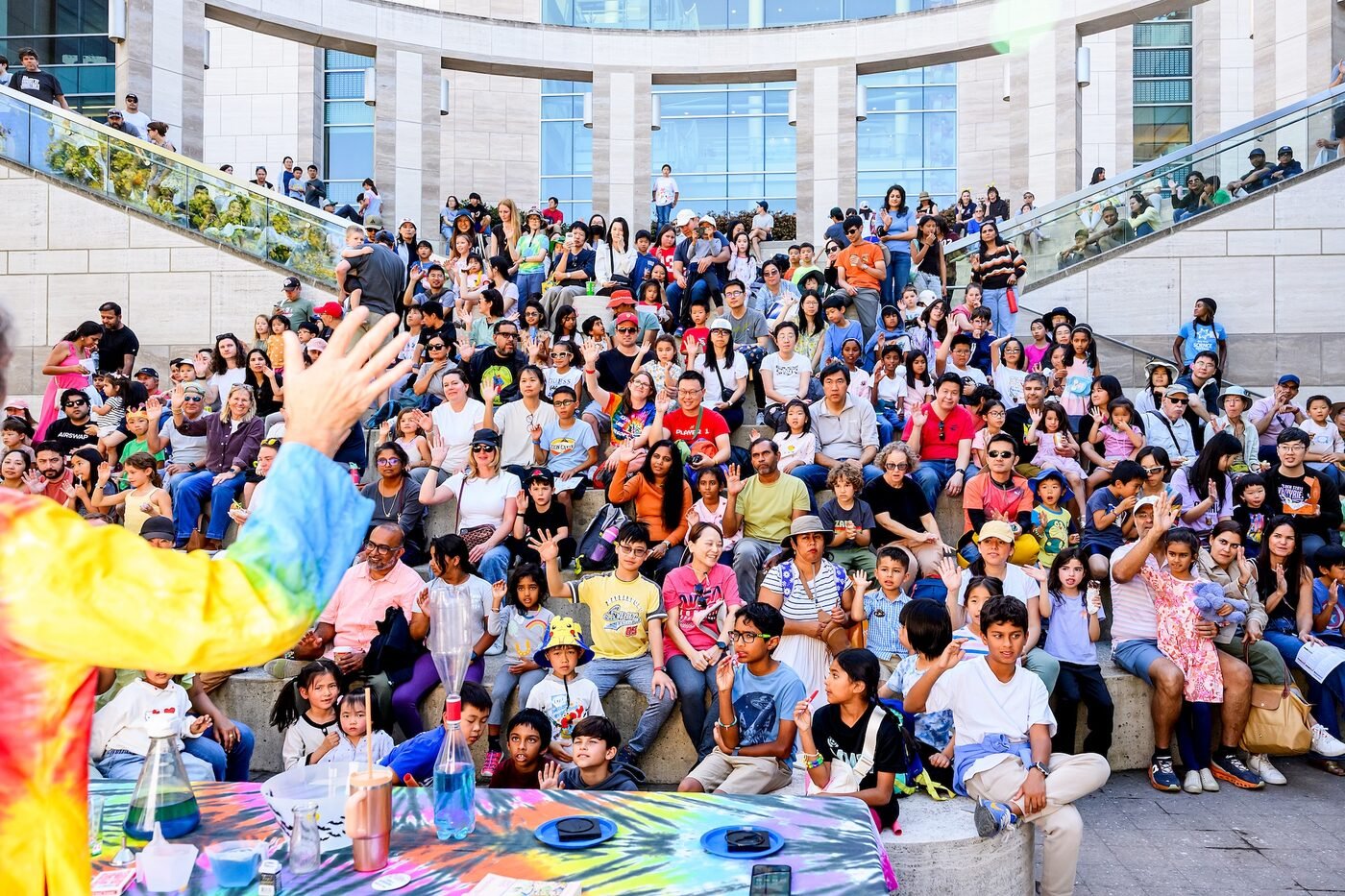
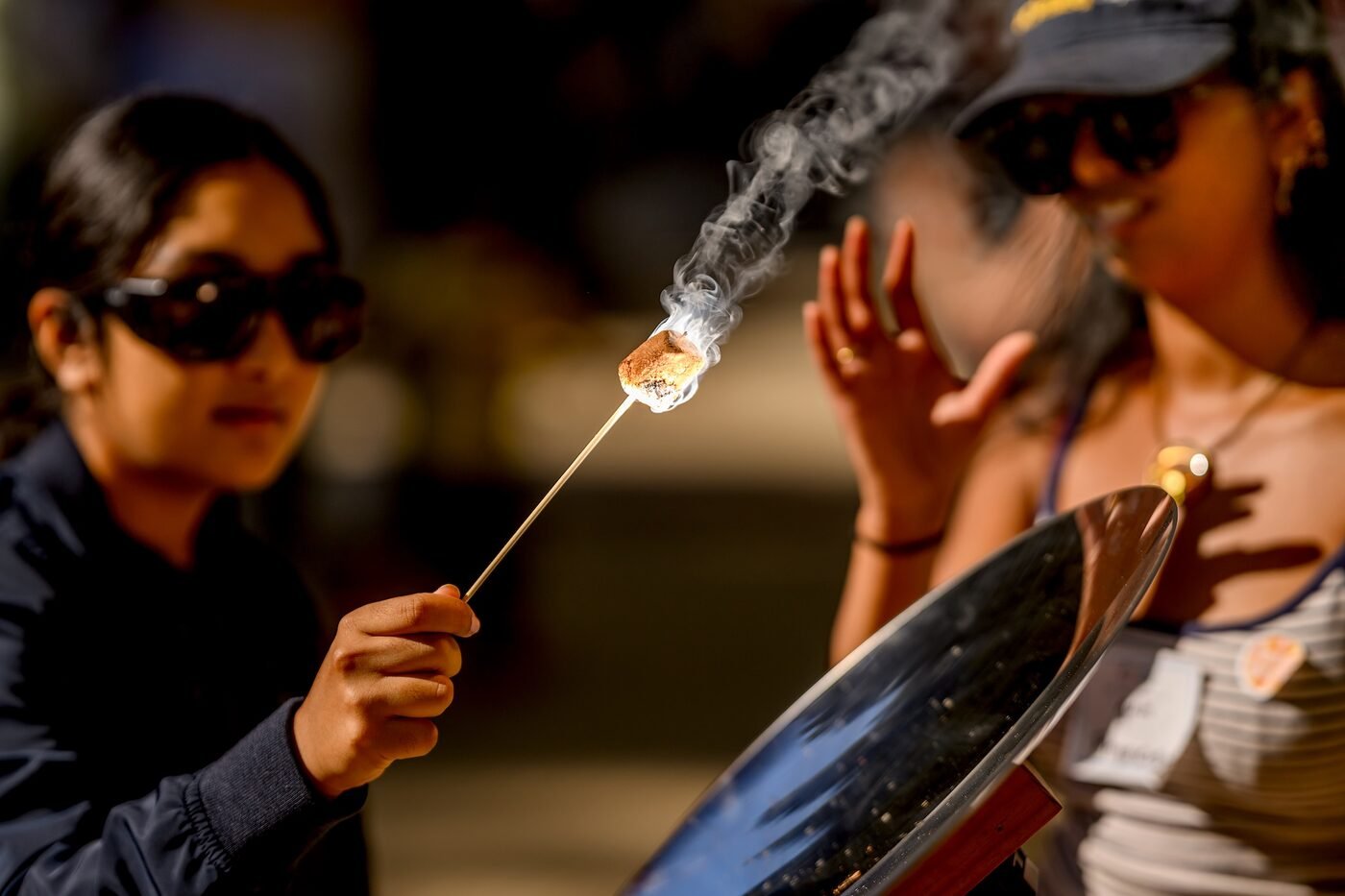
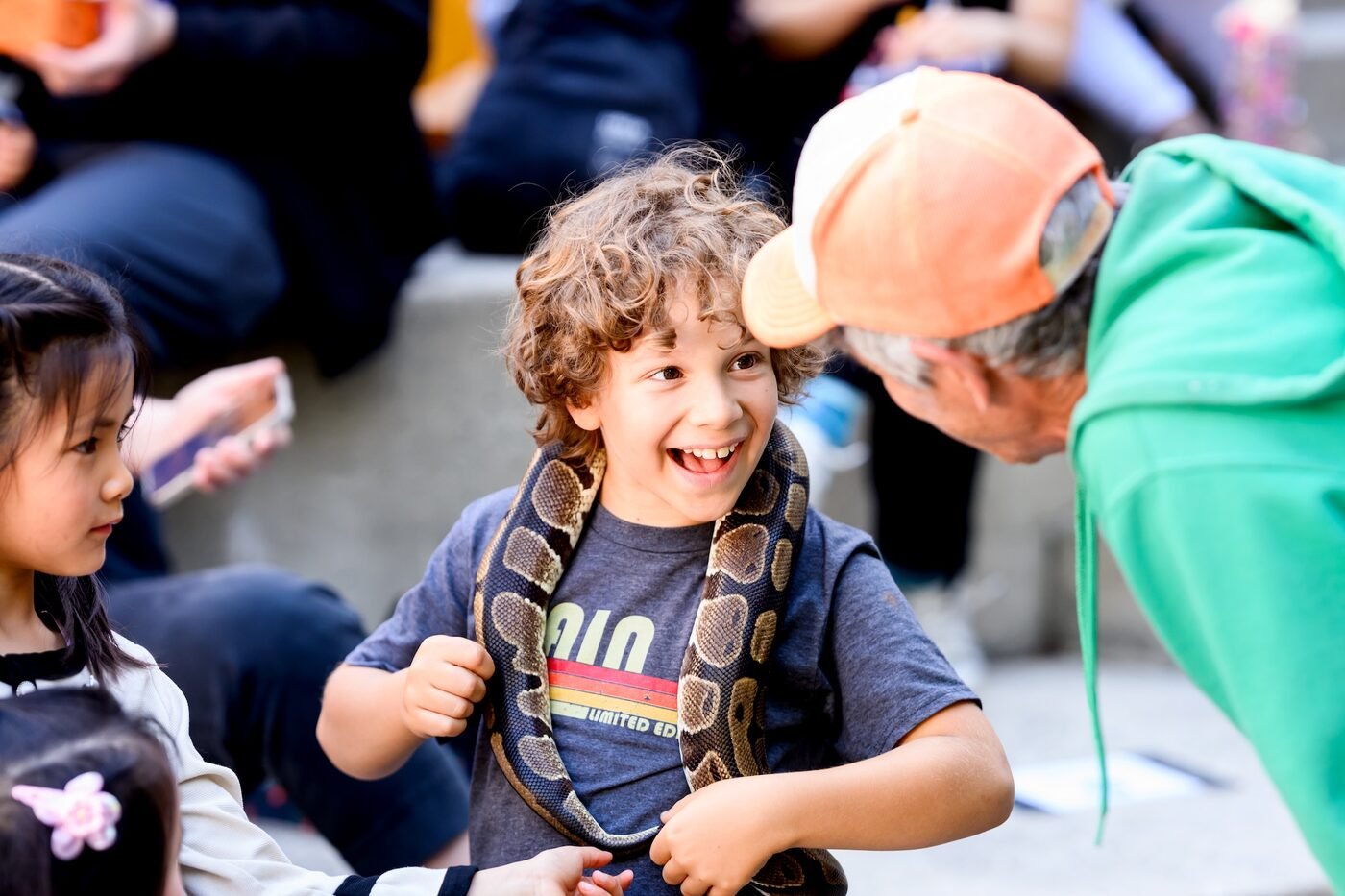
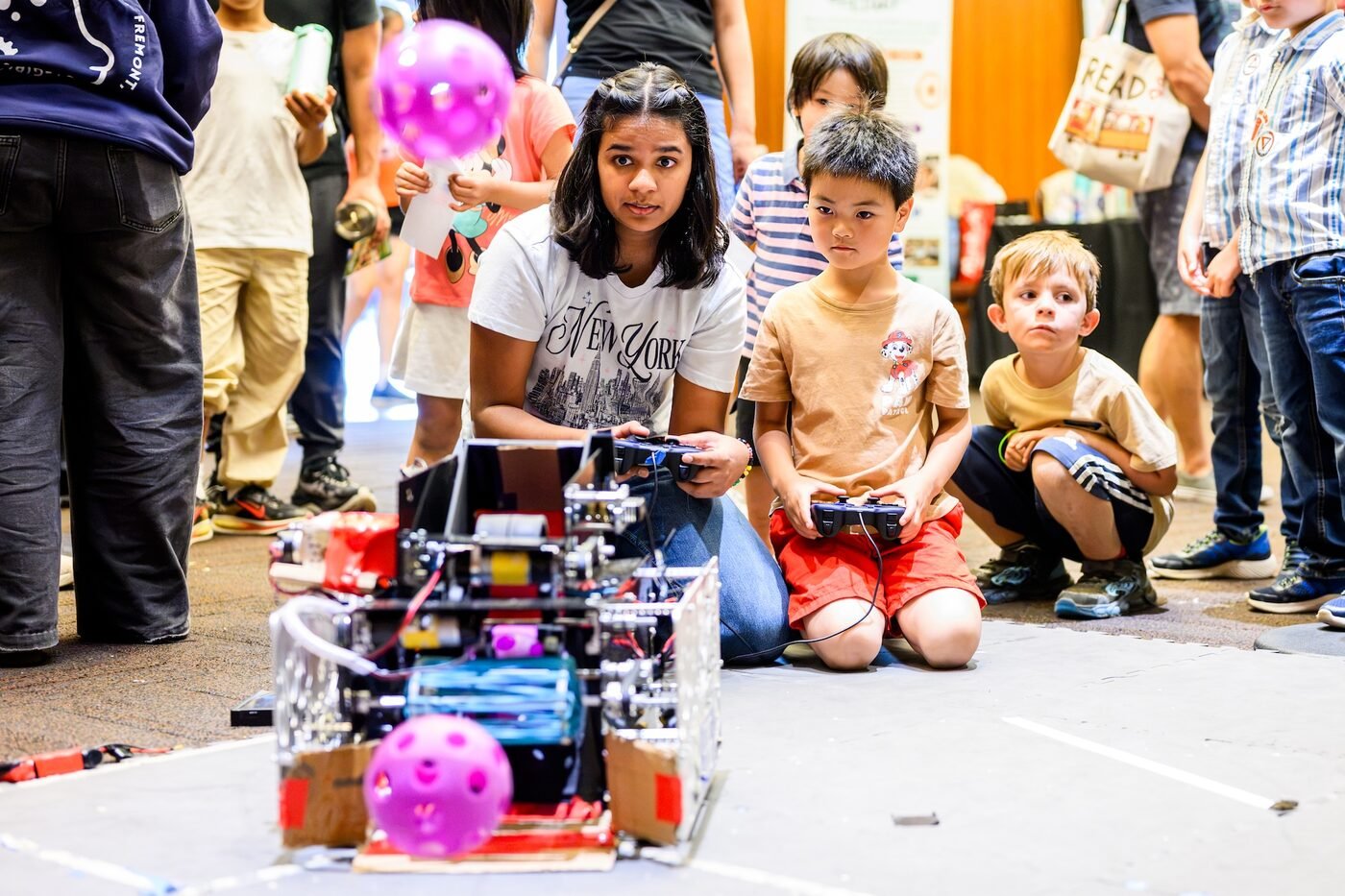
“So many community groups, nonprofits, and education organizations come together to bring hands-on STEM activities to the public free of charge,” said Science Festival Coordinator Sabine Jeske.
The festival is Northern California’s largest free celebration of science. It is organized by the Science & Health Education Partnership at UCSF with Bay Area universities, museums, cultural institutions, corporations, foundations, after-school groups, research labs and government agencies. Photos: Noah Berger / BASF, shared by the organizers.
The schedule, map and getting-there notes below are from the 2026 edition. Dates for the next festival were not yet announced; check the festival site.
What Was on in 2026
The Hands-on Stuff (All Day)
Most of the festival is tables and tents run by scientists, students and science groups, and the point is to try things. Highlights the organizers promised for 2026:
- Robot Zoo: drive robots through a maze, help one shoot a basketball, and talk to the student teams who built them. It is upstairs in the Mission Bay Conference Center.
- Inside the body: walk through a giant inflatable lung and colon, look at stem cells and blood cells under microscopes, build a skeleton, and try assembling a prosthetic leg.
- A mini volcano: a small Mount Shasta “eruption” with clouds of cornstarch ash and crispy-rice lava bombs.
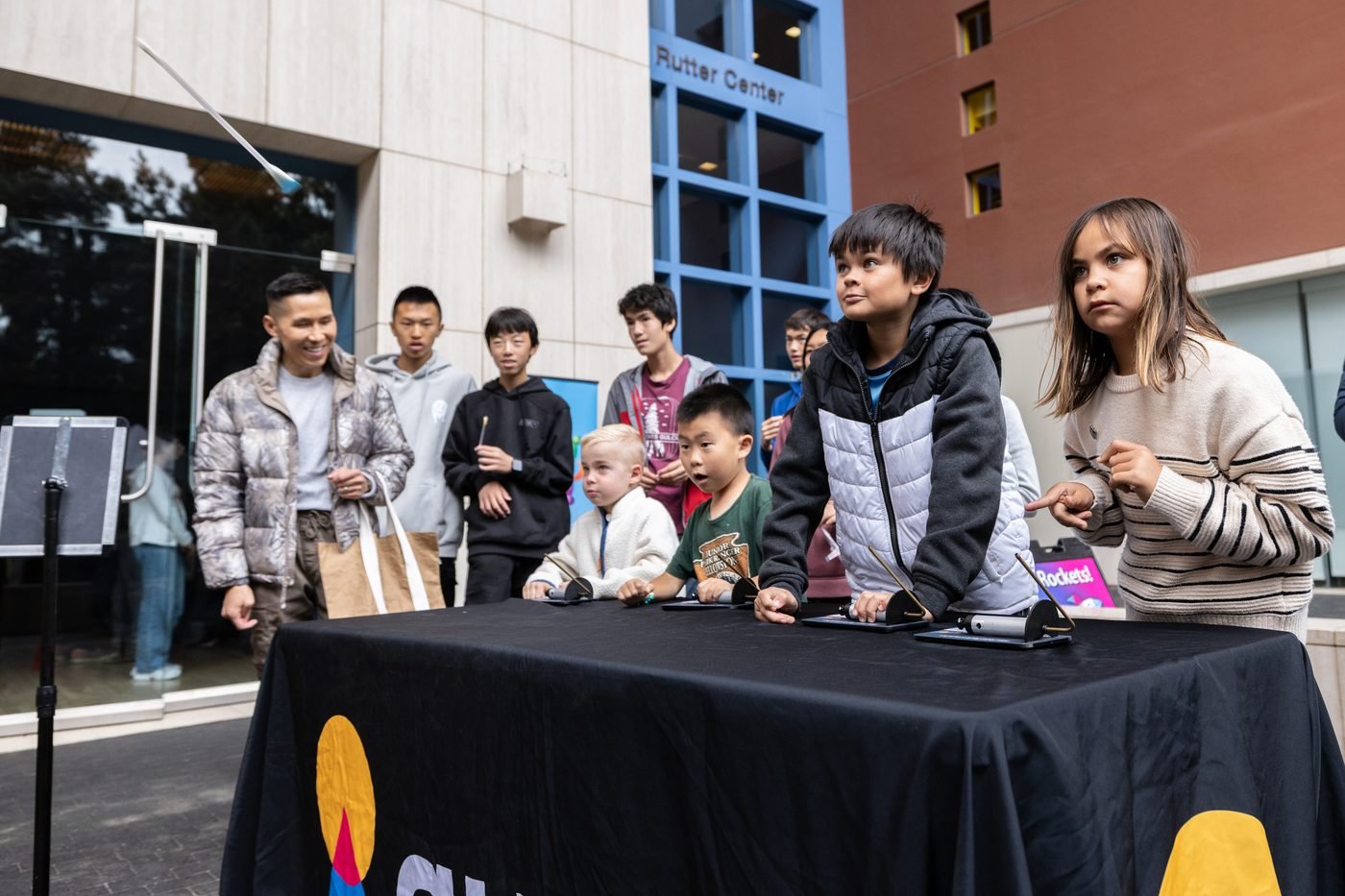
- Archery physics (new in 2026): members of the USA National Archery Team showed how it works with suction-cup arrows and long-range digital shooting.
- Optical illusions that show how your brain processes what you see, plus air rockets, live leopard sharks and a forensic science mystery to solve.
Outdoor Stage on Koret Quad
The outdoor stage sits in front of the Genentech Hall steps, and it is where younger kids will want to park for a bit:
- 11:45am: Drag STEM Storytime, with children’s book readings and a drag performance
- 12:45pm: Perception vs. Reality, a magic show
- 1:30pm: Wild Science, face to face with reptiles and amphibians
- 2:15pm: Magic That’s Actually Real, the STEM science magic show
- 3:15pm: the Tiny Rock band, songs about birds and other things on miniature instruments
Indoor Stage and Installations (Better for Older Kids)
The Sandler Stage, inside the Sandler Building, seats 150, first come first served. The picks for families are the 1pm 3 Minute Science, where UCSF PhD students race to explain their research in three minutes, and the 1:45pm talk by a wildlife cinematographer from KQED’s Deep Look on what butterflies, geckos and owls teach engineers. The day closes at 3:15pm with a live recording of the podcast That’s Absurd Please Elaborate, where experts answer ridiculous science questions.
New in 2026 were two room-sized installations upstairs in the Mission Bay Conference Center, next to the Robot Zoo: an immersive whale soundscape (11am–2pm) and Luxtriplicata, a light installation (all day).
Lab Tours (Ages 12 and Up)
Free behind-the-scenes tours of UCSF labs leave at 12:30pm and 2:30pm, in small groups of 12 to 20. As of October 14, 2026 the festival listed every tour, and every waitlist, as full. Registered visitors had to check in 40 minutes before their tour or lose the spot, and kids 12 to 15 needed a parent with them. If the festival returns, expect to sign up early.
A Simple Plan for the Day
Aim to arrive near 11am and do the hands-on tables first while the kids have energy. Catch Drag STEM Storytime at 11:45 or the reptiles at 1:30, eat from the food trucks or a packed lunch on the lawn, then head indoors to the Robot Zoo and the light installation in the afternoon. With small children, two to three hours is plenty. If you have older kids who love it, stay for the 3:15 podcast.
Getting There
Muni Is the Easy Answer
The organizers encourage everyone to take transit because parking is limited. The T Third Street stop is about 230 meters from Koret Quad, one block from Chase Center, and the 22 Fillmore, 15 Bayview Hunters Point Express and 55 Dogpatch buses also serve the campus. From BART, get off at Powell and transfer to the T. From Caltrain, transfer to the T at 4th and King or walk 15 to 20 minutes. There is no special ferry service. Our guide to riding Muni and BART with kids covers fares and strollers.
Driving and Parking
4th Street is closed between 16th Street and Nelson Rising Lane from 8am to 6pm. The two closest garages are the UCSF Community Center Garage at 1625 Owens Street and the UCSF Third Street Garage at 1650 Third Street. Both cost $5 an hour with a $35 daily maximum, paid through the PayByPhone app. A Valkyries finals game at Chase Center, one block away, was on the same day in 2026 and the organizers warned that parking might be impacted. On any event day at Chase Center, allow extra time or, better, take Muni. Both garages have ADA spaces at a reduced $7 a day with a valid disabled placard.
Bikes
There are bike racks at Genentech Hall near Koret Quad, a bike enclosure and racks at the 1625 Owens garage, and an enclosure plus 16 lockers at the Third Street garage.
What to Bring (and What to Leave Home)
- Bring: a refillable water bottle (there are refill stations), layers for Mission Bay wind, and ear protection for noise-sensitive kids. It gets loud.
- Food: food trucks and nearby restaurants, or bring your own.
- Leave home: pets, alcohol, drones, smoking and vaping are not allowed.
- Accessibility: most exhibits are indoors or on paved paths, and the grass areas can be reached from a paved walkway around Koret Quad. Wheelchairs are not provided. ADA portable restrooms are on site, and there are restrooms inside the Mission Bay Conference Center and the Sandler Building.
The organizers posted a detailed 2026 festival map: festival map, or the printable PDF to save on your phone. It shows the outdoor stage on Koret Quad and the indoor stage in the Sandler Building. The festival ran rain or shine, so pack a layer either way.
Make a Day of It in Mission Bay
The Chase Center plaza next door, Thrive City, is free to wander. Our Chase Center with kids guide covers it. For more of this kind of day, see our best museums for kids, Exploratorium vs. Cal Academy and 25 free things to do with kids.
The 2026 recap text and photos came from the festival organizers on October 21, 2026. Date, hours, location and parking were confirmed with the festival organizers on October 1, 2026; the map, stage times, tours and parking were re-checked on the festival site on October 14, 2026. Schedule details come from bayareasciencefestival.org and the festival’s press release, and may change. Check the festival site before you go.
Questions People Ask About Bay Area Science Festival 2026 for Kids: What to See and When
Is the Bay Area Science Festival free?
Yes. It is free and open to everyone, with no tickets or registration needed. The free behind-the-scenes lab tours (ages 12+) needed advance sign-up, and as of October 14 every tour and waitlist is full.
When and where is the Bay Area Science Festival 2026?
Saturday, October 17, 2026, 11am to 4pm, on and around Koret Quad on UCSF's Mission Bay campus, one block from Chase Center.
What happens if it rains?
The festival runs rain or shine. If the weather turns dangerous, activities move indoors.
How do I get to the Bay Area Science Festival?
Muni is easiest: the T Third Street stop is about 230 meters away, and the 22, 15 and 55 buses also serve the campus. If you drive, the UCSF garages at 1625 Owens St and 1650 Third St cost $5 an hour with a $35 daily max. 4th Street is closed 8am to 6pm.
Can I bring food, a stroller or my dog?
Bring your own food and a refillable water bottle if you like; there are food trucks and refill stations too. Pets are not allowed. Most exhibits are indoors or along paved paths, with some on the grass of Koret Quad.
What age is the Bay Area Science Festival for?
All ages, from preschoolers to adults. Little kids will like the outdoor stage shows and hands-on tables; the indoor talks suit older kids and teens. The lab tours (12+) are full.
More Guides
Union Square Christmas Tree 2026: Real Tree, Lighting Date, Rink and Muni
Is the Union Square tree lit yet? It's a real tree this year, due lit by Black Friday. Status checked 19 November…
Read the guide →Thanksgiving 2026 in San Francisco: What’s Open, What’s On
Thanksgiving is Thursday 26 November 2026: what is open and free, which museums close, the Golden Gate Park Turkey Trot, weekend shows…
Read the guide →San Francisco Holiday Lights 2026: Lightscape, the Bay Lights, Union Square and What Is Free
Holiday lights in San Francisco for 2026: what is confirmed (Lightscape, the Union Square rink, the free Conservatory light show, the Bay…
Read the guide →More to Explore
Happening Soon
- Illuminate SF Festival of Light Fri, Nov 27, 2026 – Jan 31, 2027 · Citywide, San Francisco
- Let’s Glow SF: Free Downtown Holiday Projection Festival (Dec 4–13, 2026) Fri, Dec 4–13 · Downtown San Francisco (six buildings)
- 24th Annual Parol Lantern Festival Sat, Dec 12 · Location to be announced by SOMA Pilipinas
- Southwest Airlines Chinese New Year Festival & Parade Sat, Feb 20 · Parade route from Second and Market Streets to Chinatown
Places to Check Out
- Alta Plaza Park Parks & Playgrounds
- Angelo J. Rossi Playground Parks & Playgrounds
- Aquarium of the Bay Attractions
- Asian Art Museum Museums
Cite this page: Project SF, “Bay Area Science Festival 2026 for Kids: What to See and When”, projectsf.com/guides/bay-area-science-festival-with-kids/ (updated ).